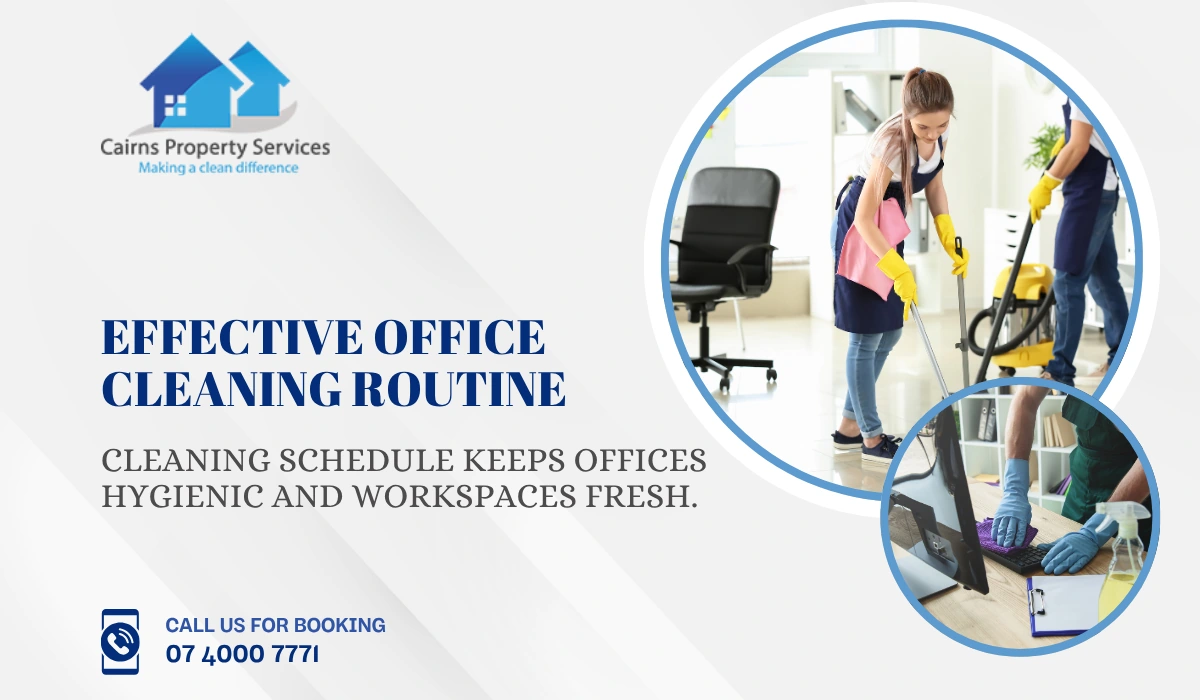
A clean office is essential for maintaining workplace hygiene, employee comfort, and a professional business environment. Cairns Property Services recognises that office cleaning involves more than removing visible dust and rubbish. A well-organised cleaning routine helps manage germs, reduce dirt buildup, maintain shared spaces, and protect workplace surfaces. Understanding which tasks should be completed daily, weekly, and monthly makes it easier for businesses to maintain consistent cleanliness throughout their premises.
Whether a workplace has a few employees or multiple departments, a structured commercial cleaning checklist can help identify priorities, assign responsibilities, and maintain a healthier working environment.
Why Is a Commercial Cleaning Checklist Important?
Offices experience continuous foot traffic, particularly around entrances, meeting rooms, kitchens, reception areas, and bathrooms. Without regular attention, dust, fingerprints, food residue, and waste can accumulate quickly.
A practical office cleaning checklist helps businesses:
- Maintain hygienic desks and frequently touched surfaces.
- Reduce dust and dirt accumulation.
- Keep kitchens and bathrooms sanitary.
- Improve the appearance of reception and meeting areas.
- Establish consistent cleaning standards.
- Organise cleaning responsibilities and schedules.
Businesses that use professional commercial cleaning services can also use checklists to communicate their expectations and monitor cleaning quality.
For further insights, read about the importance of commercial cleaning for businesses in Cairns.
Daily Office Cleaning Checklist: Essential Tasks
Daily cleaning focuses on maintaining hygiene in frequently used spaces and preventing everyday dirt from building up. A consistent commercial cleaning routine helps businesses maintain clean workstations, shared facilities, and welcoming office environments.
1. Clean Desks and Frequently Touched Surfaces
Desks, keyboards, door handles, light switches, shared equipment, and reception counters are touched regularly throughout the day.
Daily office cleaning tasks should include:
- Wiping frequently touched surfaces using suitable cleaning products.
- Cleaning reception counters and shared workstations.
- Removing visible dust and fingerprints.
- Disinfecting high-touch points where appropriate.
- Keeping shared equipment areas tidy.
Professional commercial cleaners should use appropriate cleaning products for different surfaces, particularly electronic equipment.
2. Maintain Clean Floors and Entrance Areas
Entrances and corridors collect dirt from shoes, outdoor dust, and general foot traffic. Regular commercial cleaning services help maintain clean floors and prevent dirt from spreading throughout the workplace.
Daily floor maintenance includes:
- Vacuuming carpeted areas.
- Sweeping and mopping hard floors.
- Removing visible spills promptly.
- Cleaning entrance mats.
- Keeping corridors and walkways free from rubbish.
These tasks help maintain a clean and welcoming office environment.
3. Empty Office Bins and Manage Waste
Waste management is another important part of daily office cleaning tasks.
- Empty rubbish bins throughout the office.
- Replace bin liners when necessary.
- Separate recyclable materials where facilities are available.
- Clean bin surfaces if spills or residue occur.
- Ensure waste areas remain tidy and hygienic.
Proper waste management helps prevent unpleasant odours and keeps workplace surroundings clean.
Check Reception Areas and Office Presentation
Reception areas are often the first point of contact for clients and visitors. Maintaining their cleanliness helps create a positive impression.
Daily tasks include:
- Dusting reception furniture.
- Cleaning glass doors and visible fingerprints.
- Keeping waiting areas tidy.
- Arranging chairs and furniture neatly.
- Removing rubbish and unnecessary clutter.
A clean reception area contributes to a professional workplace appearance.
Weekly Office Cleaning Checklist: Detailed Maintenance
Weekly cleaning focuses on areas that may not require attention every day but gradually accumulate dust, marks, and dirt.
1. Dust Furniture and Hard-to-Reach Areas
Weekly tasks may include:
- Dusting shelves, cabinets, and furniture.
- Cleaning window sills and skirting boards.
- Removing dust from accessible vents.
- Wiping office partitions and interior glass.
- Cleaning decorative items and display surfaces.
Regular dust removal helps maintain indoor cleanliness and prevents buildup around office furniture.
2. Refresh Meeting Rooms and Common Areas
Meeting rooms and common areas should receive additional attention each week.
Tasks include:
- Cleaning conference tables and chairs.
- Wiping whiteboards and presentation surfaces.
- Removing fingerprints from glass partitions.
- Vacuuming under accessible furniture.
- Checking shared seating areas for stains or dirt.
These areas often create the first impression for clients and visitors, making their maintenance important for professional workplace presentation.
3. Review Kitchen and Bathroom Cleaning
Weekly maintenance can include deeper attention to:
- Kitchen cupboard fronts and appliance exteriors.
- Microwave interiors and refrigerator shelves, where appropriate.
- Bathroom wall tiles and fixtures.
- Soap dispensers and accessible storage areas.
- Floor edges and corners.
Businesses may adjust these tasks depending on the number of employees and how frequently facilities are used.
Monthly Office Cleaning Checklist: Deep Cleaning Tasks
Monthly cleaning addresses areas that are often overlooked during routine maintenance. These activities help preserve office finishes and maintain cleanliness in less frequently accessed spaces.
1. Deep Clean Carpets and Office Floors
Carpets and hard floors can retain dirt even when they appear clean.
Monthly maintenance may involve:
- Scheduling carpet deep cleaning when required.
- Removing stubborn marks from flooring.
- Cleaning floor edges and corners.
- Inspecting carpets for stains or wear.
- Checking floor finishes for damage.
The cleaning frequency depends on foot traffic, flooring material, and workplace conditions.For more carpet care advice, explore our guide on removing stubborn carpet stains.
2. Clean Windows and Interior Glass
Monthly window maintenance helps improve natural light and the overall appearance of office spaces.
Tasks include:
- Cleaning accessible interior windows.
- Removing fingerprints from glass partitions.
- Dusting window frames and sills.
- Checking for accumulated dirt around window tracks.
Exterior window cleaning may require a separate schedule depending on accessibility and safety requirements.
3. Inspect Storage Areas and Overlooked Spaces
Monthly inspections can help identify areas requiring additional attention.
Consider cleaning:
- Storage rooms and cupboards.
- Accessible areas behind furniture.
- High-level dust accumulation where safely accessible.
- Office equipment surrounds.
- Less frequently used meeting rooms.
High-level cleaning should only be undertaken with suitable equipment and appropriate safety procedures.
How to Create an Effective Office Cleaning Schedule
A cleaning schedule should reflect the size, layout, occupancy, and usage of the workplace rather than following a fixed routine for every business.
| Frequency | Recommended Tasks |
|---|---|
| Daily | Desks, bins, floors, bathrooms, kitchen surfaces |
| Weekly | Furniture dusting, glass partitions, meeting rooms |
| Monthly | Carpet maintenance, detailed floor care, storage areas |
Businesses can assign responsibilities to employees for basic tidiness while arranging professional cleaners Cairns for specialised cleaning and regular maintenance.
A written checklist also helps cleaning teams identify completed tasks and areas requiring additional attention.
When Should Businesses Consider Professional Office Cleaning?
Some cleaning activities require specialised equipment, additional time, or trained personnel. Professional commercial cleaners can help businesses maintain offices through scheduled cleaning and more detailed maintenance.
A professional commercial cleaning company may assist with:
- Routine office and workplace cleaning.
- Carpet and floor maintenance.
- Detailed cleaning of shared facilities.
- Window and glass cleaning.
- Periodic deep cleaning.
- Emergency cleaning following unexpected spills or incidents.
Businesses should choose cleaning schedules based on their operational needs, workplace conditions, and hygiene priorities.
Commercial Cleaning and Residential Cleaning: Key Differences
Cleaning requirements vary depending on the type of property and its daily usage. Commercial cleaning focuses on maintaining hygiene in offices and workplaces, while residential cleaning keeps homes clean, comfortable, and organised.
- Commercial Cleaning: Includes office cleaning, workplace hygiene, floor maintenance, and shared-area cleaning.
- Residential Cleaning: Covers home cleaning, house cleaning, and regular house cleaning.
- Specialised Residential Services: Domestic cleaners may also handle bond cleaning, property cleaning services and end of lease cleaning for rental inspections or handovers.
For a more detailed comparison, read our guide on how cleaning requirements differ between homes and workplaces.
Learn more about how cleaning requirements differ between homes and workplaces.
Maintaining Cleaner and Healthier Office Spaces
A structured commercial cleaning checklist helps businesses maintain workplace hygiene, organise cleaning schedules, and create a comfortable environment for employees and visitors. Following daily, weekly, and monthly cleaning routines makes office maintenance more consistent and manageable.
Cairns Property Services understands the importance of maintaining clean and presentable workplaces. A well-planned cleaning routine helps create a healthier and more professional environment.
Call us on 07 4000 7771 or email info@cairnspropertyservice.com.au to discuss your cleaning requirements and arrange a suitable service.